QUANTITATIVE DATA COLLECTION
Structured surveys at scale
- Large-scale household surveys
- CAPI, CATI and other digital modes
- Monitoring and evaluation surveys
- Baseline and endline studies
Research360 supports data collection across East, West, Central and Southern Africa, combining local researchers and country-level knowledge with common protocols, supervision and quality controls.
Our fieldwork model is built for different African operating environments - from urban centres and informal settlements to rural communities, border areas and dispersed populations.
Coverage is confirmed against the practical requirements of each study, including team availability, language capability, respondent access, logistics and quality controls.
Country plans are adapted locally within a common delivery framework so language, access, permissions and logistics can vary without weakening comparability.
Urban, rural, community and cross-border mobilisation supported through local teams and regional coordination.
Francophone, Anglophone and local-language requirements are built into recruitment, tools and supervision.
Field plans account for geographic reach, connectivity, permissions, security and feasible supervision arrangements.
Quantitative and qualitative assignments are coordinated through local teams using shared protocols and reporting routines.
Multi-country assignments are coordinated through a shared study framework while country teams manage language, access, logistics and field realities locally.
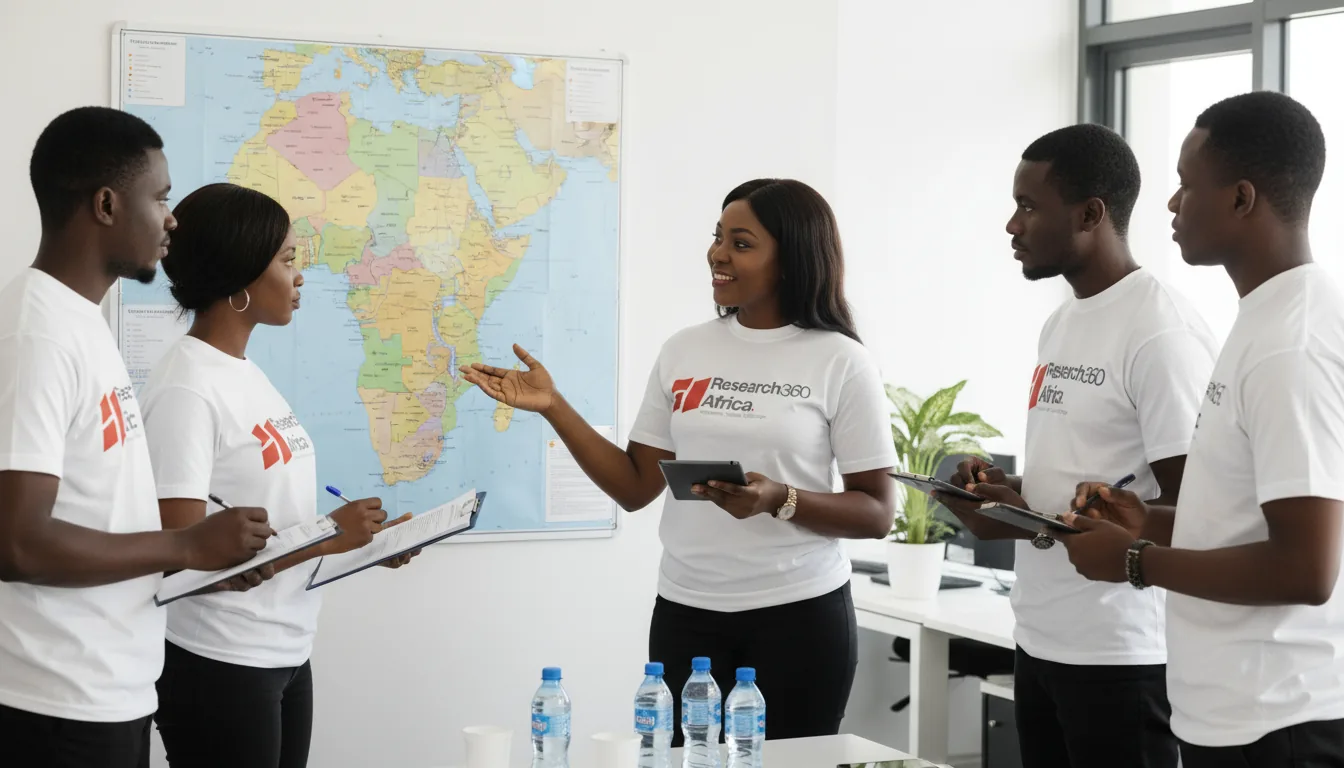
Different sectors create different respondent, sensitivity and access requirements. Our field plans are therefore adapted to the programme context rather than using one standard deployment model.
Health-seeking behaviour, maternal care, WASH practices, immunisation, facility use and community service access.
School attendance, learning outcomes, teacher performance and barriers affecting vulnerable learners.
Household livelihoods, employment, skills programmes, income sources, agricultural activity and food security.
Gender dynamics, inclusion, empowerment, participation and sensitive topics such as GBV where appropriate safeguards are in place.
Citizen experience, service delivery, trust, civic engagement, transparency and institutional accountability.
Migration drivers, refugee and host-community needs, mobility, remittances and service access in displacement settings.
For multi-country studies, the central project team protects the common protocol while country teams manage local realities that affect fieldwork.
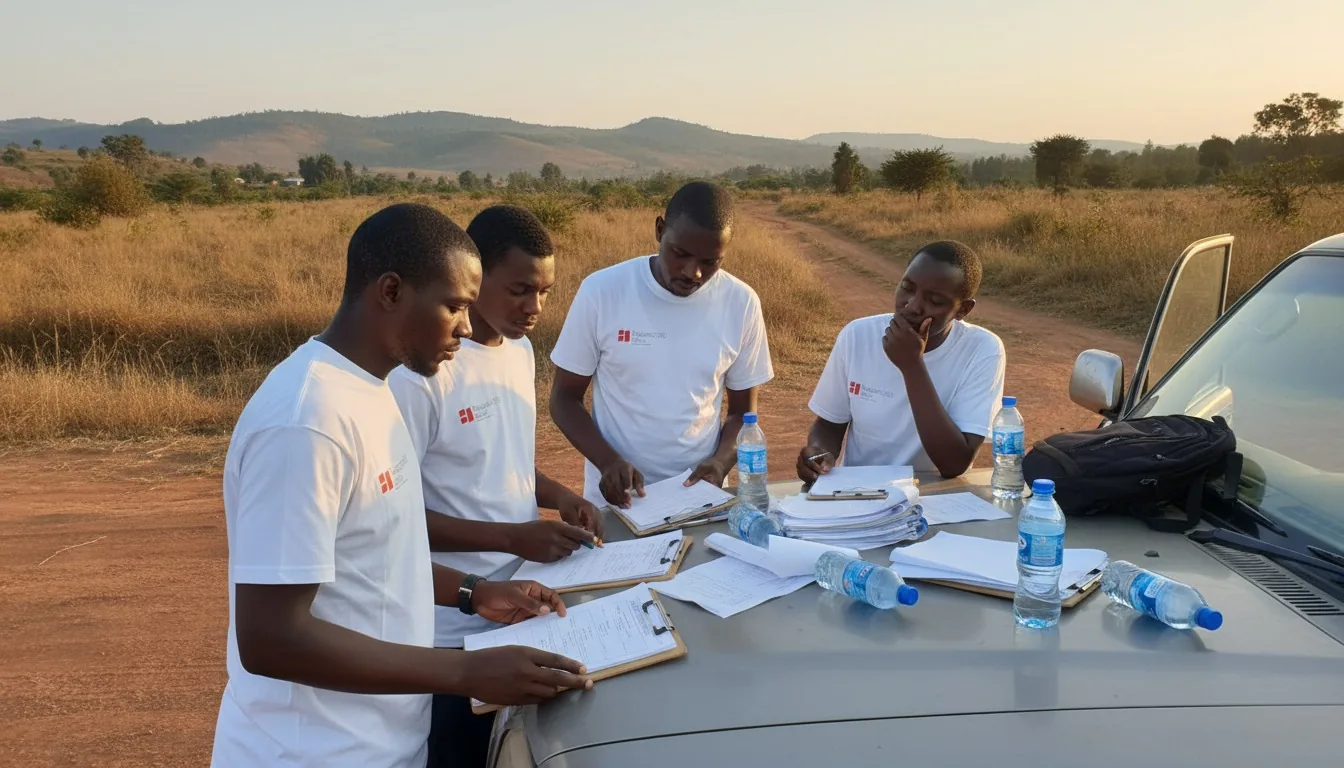
We confirm delivery only after considering the practical requirements of the brief - particularly for hard-to-reach populations, sensitive topics and short mobilisation windows.
Can the required population be identified and recruited using a defensible approach in the available timeframe?
Are suitable enumerators, moderators and translators available for the required language and respondent profile?
What permissions, travel, security, connectivity or community-entry requirements affect the field plan?
Can supervision, verification and central review be implemented to the standard required by the protocol?
See how Research360 handles study design, sampling, training, methods, live monitoring and quality assurance.
We can assess practical field feasibility and identify the team structure, languages, mobilisation requirements and delivery controls needed before you finalise the field budget.